Publisher
d’Escrivan
Eléonore
Valenciennes, France
Hosting
OVH
2 rue Kellermann - 59100 Roubaix - France
Contacts


S-cult
Discover
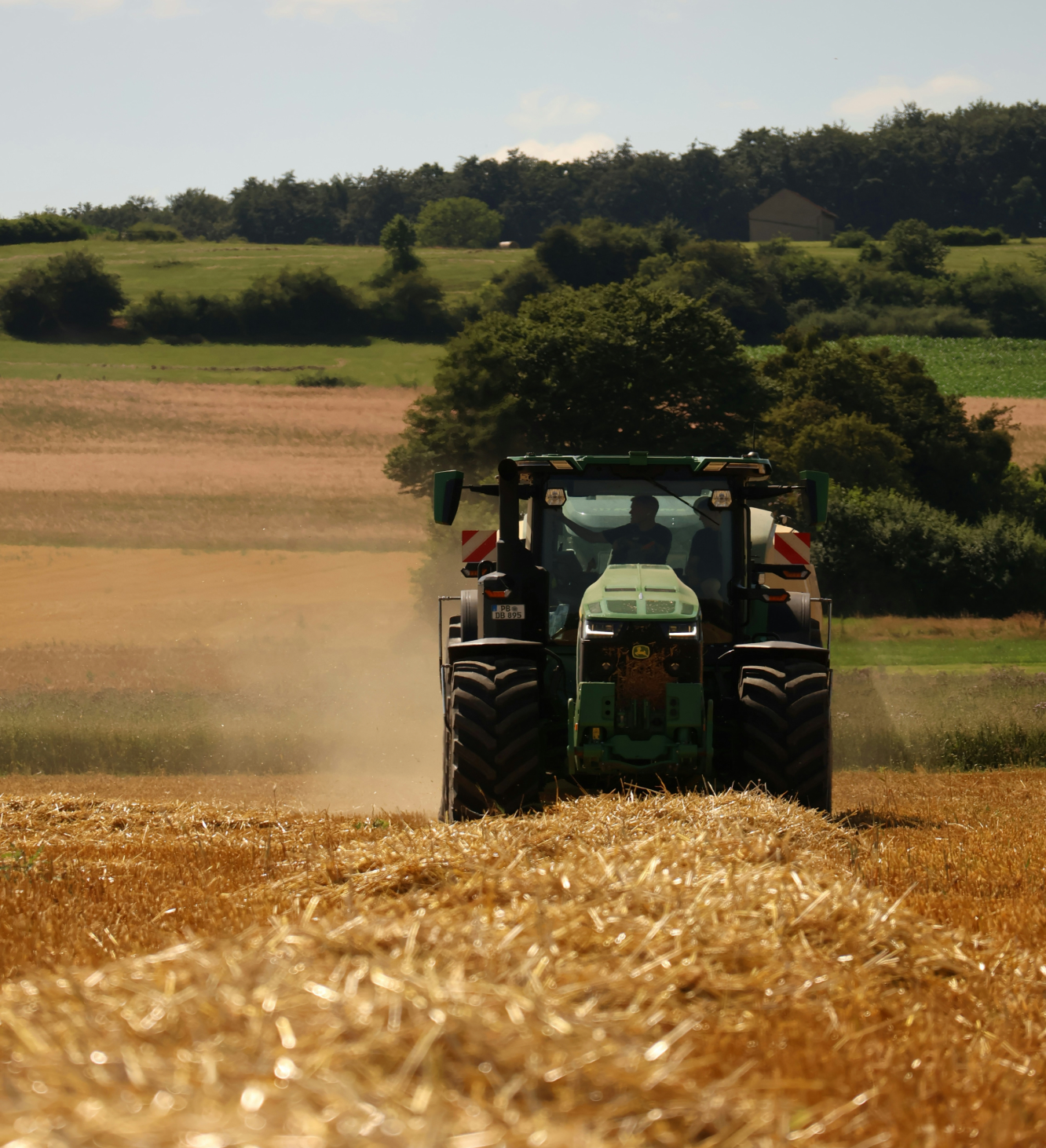
Intensive farming drives close to 22% of global greenhouse gas emissions. Meanwhile French farmers work
55 hours a week for around €1,040 a month once subsidies are stripped away,
roughly 25% below minimum wage.
Rethinking how we farm is an urgent ecological and social priority.
IPCC/FAO, 2023 Synthesis Report / Fondation IFRAP
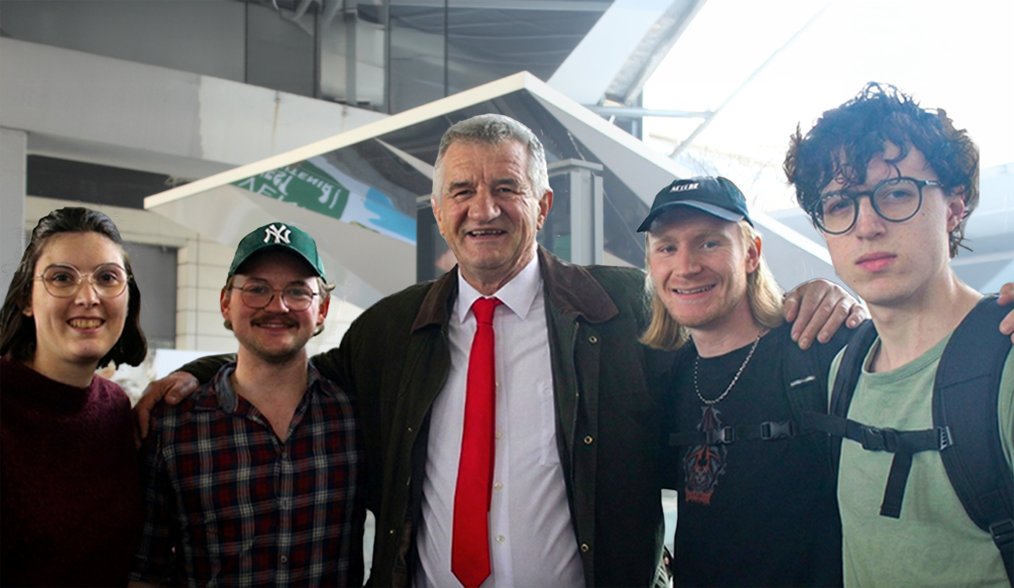
The team
Paul Farasse
Transportation designer
Léo Deluy
Transportation designer
Eléonore d’Escrivan
UX designer & manager
Gaspard Deveugle
Digital designer & manager
5 month - February to June 2026

“How can we restructure
the current farm into a diversified operation that is more environmentally friendly
and better for the soil,
while enhancing the connection between the farmer, the land,
and the customers?”
User research
Insight
We combined desk research into the ecological and social costs of intensive farming,
a visit to the Salon International de l'Agriculture to explore emerging robotics
and existing practices and a mix of discovery & contextual interviews with four farmers and one agriculture student to map their needs and fears.
Limited risk :
Farmers are open to transitioning, but only
if the financial and operational risks stay low,
which is why animals and agroforestry, low-cost
and self-reinforcing practices, are non-negotiable
in our system.
Scalable permaculture :
Permaculture works ecologically, but today
it's manual and garden-scale. Making it viable
on a real farm means using technology to scale it.
Control :
Farmers don't want to be replaced by technology, they want to stay in control of their land
and decisions, so every tool has to support them rather than take over.
Human scale :
Reducing plot size and machinery lets the farm return to a scale a person can actually manage, instead of chasing ever-bigger equipment.
Pleasure :
Farmers grow food because they love doing it,
so the solution has to keep them close
to the product.
Recognition :
Farmers want their work acknowledged,
so the system needs to create a visible link between them and the people who eat what they grow.
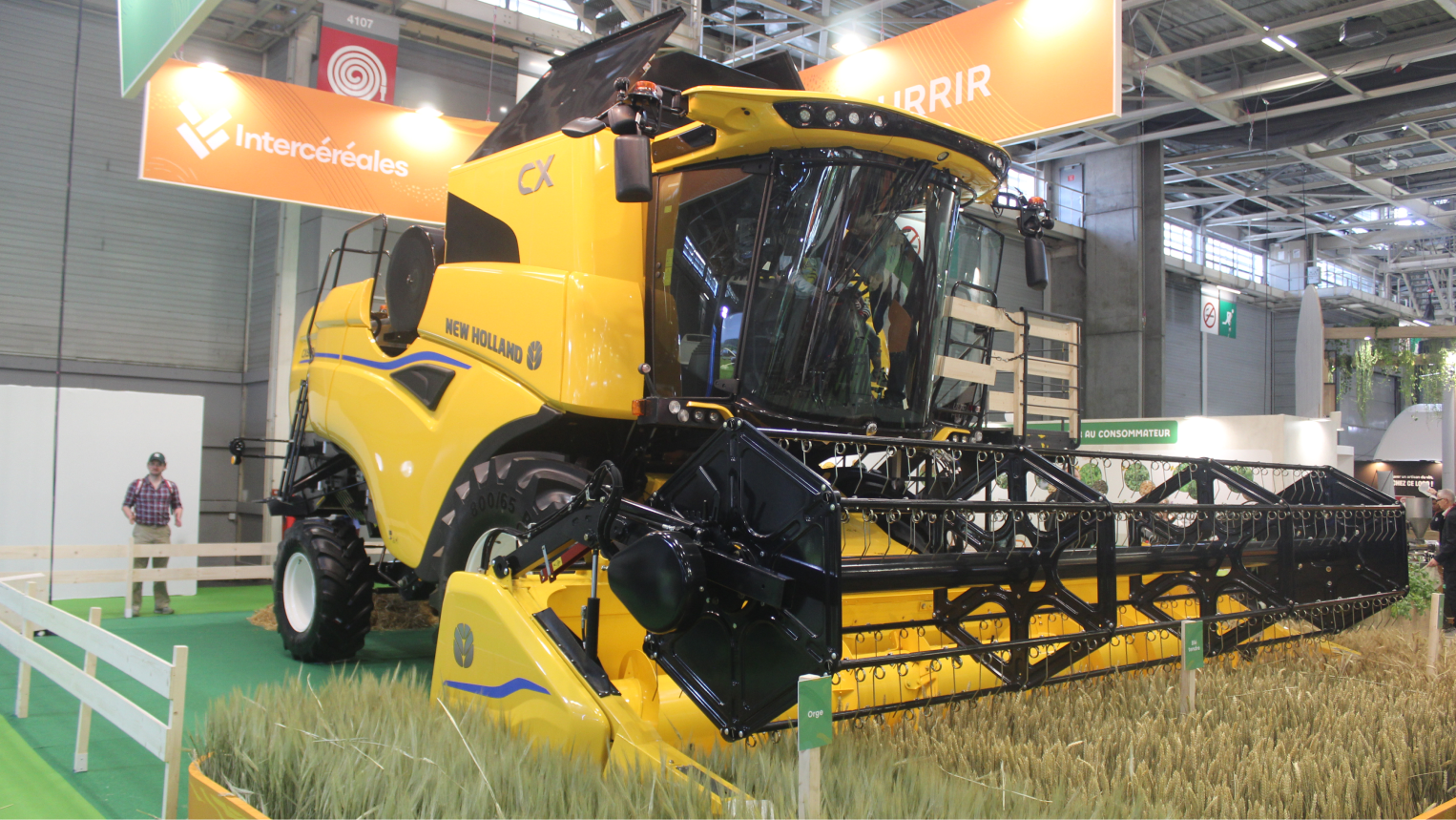
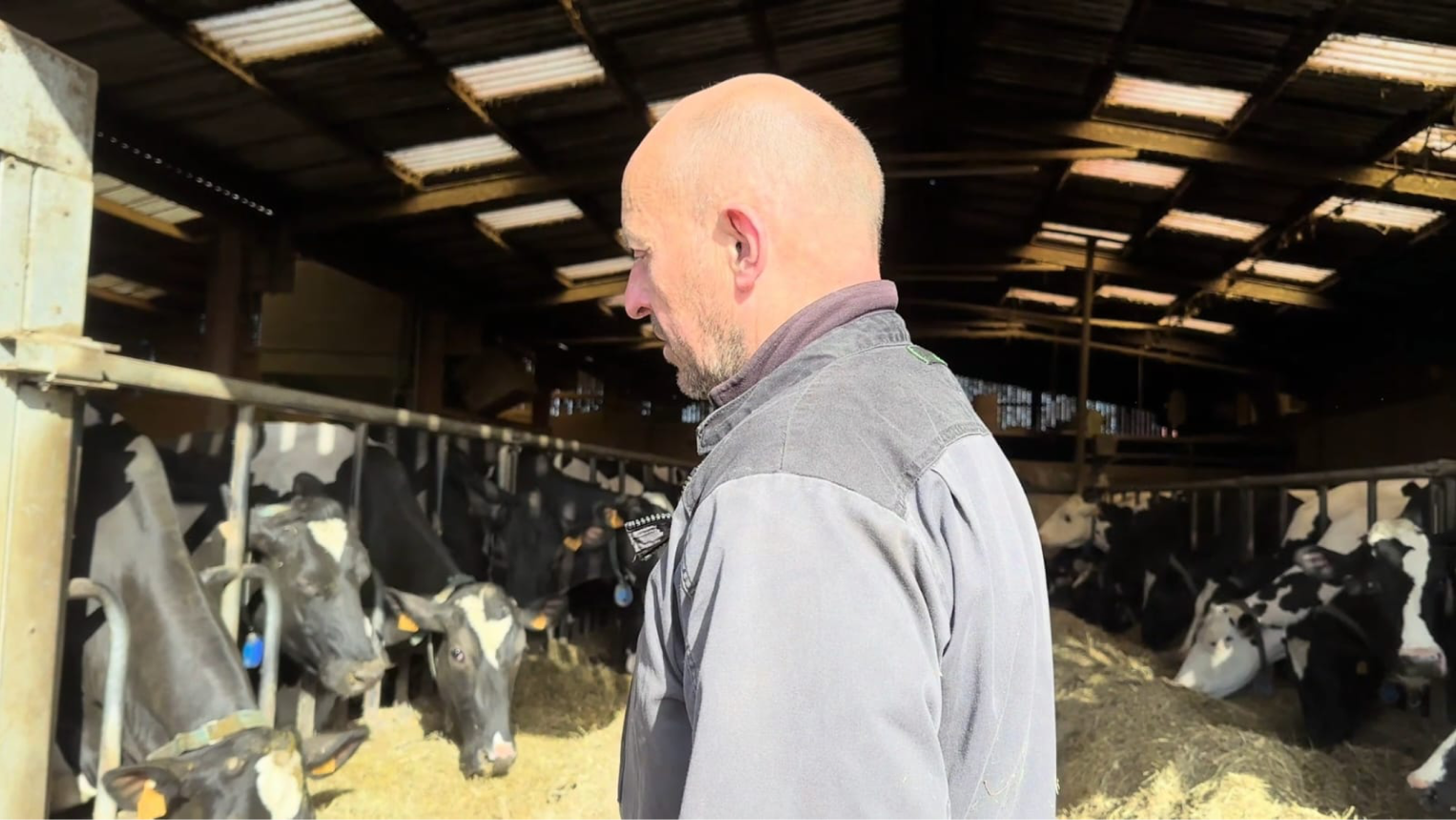
Salon international de l’agriculture - Paris, France
contextual interviews
interviews
We’d really like to be profitable, but in the agricultural sector
we have a little problem. We’ll go
to the co-op and find out the price there. They buy it from us
at €0.04/kg and it ends up
at €2/kg in the supermarkets.
Our ecosystem
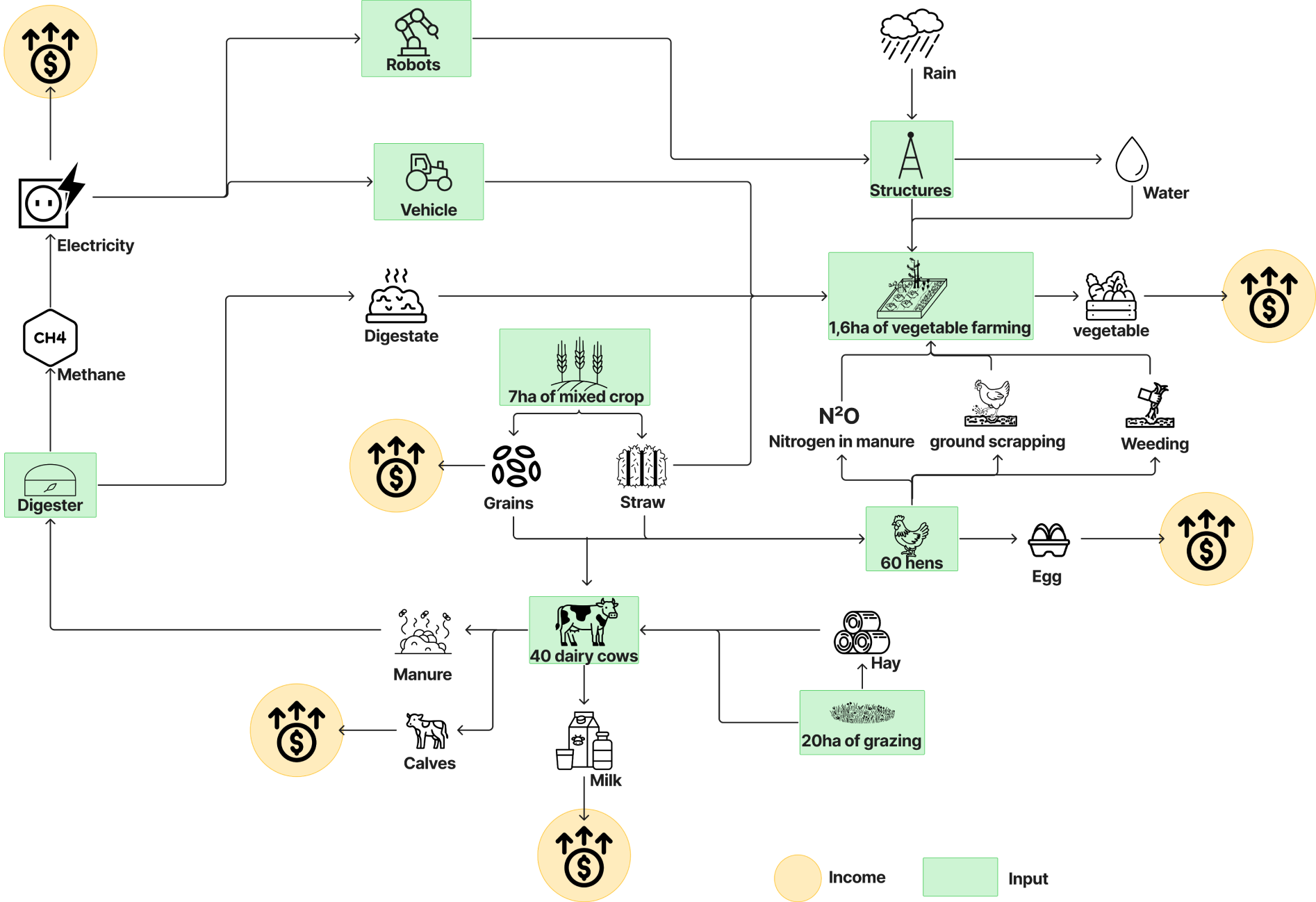
I designed this ecosystem mapping to model our farm operates as a fully autonomous, chemical-free, and closed-loop system.
My goal was to establish a visual architecture that translates complex circular interactions into a clear narrative, using green to map core inputs, white to trace produced yields, and yellow to identify revenue streams.
With this close loop system, our farm eliminates fuel costs entirely by powering
all operational robots and vehicles
with electricity generated
from manure-derived methane.
Through this circular design, we cut water consumption by 50% and reduce
CO2-equivalent emissions by 75% compared to conventional modern farms.
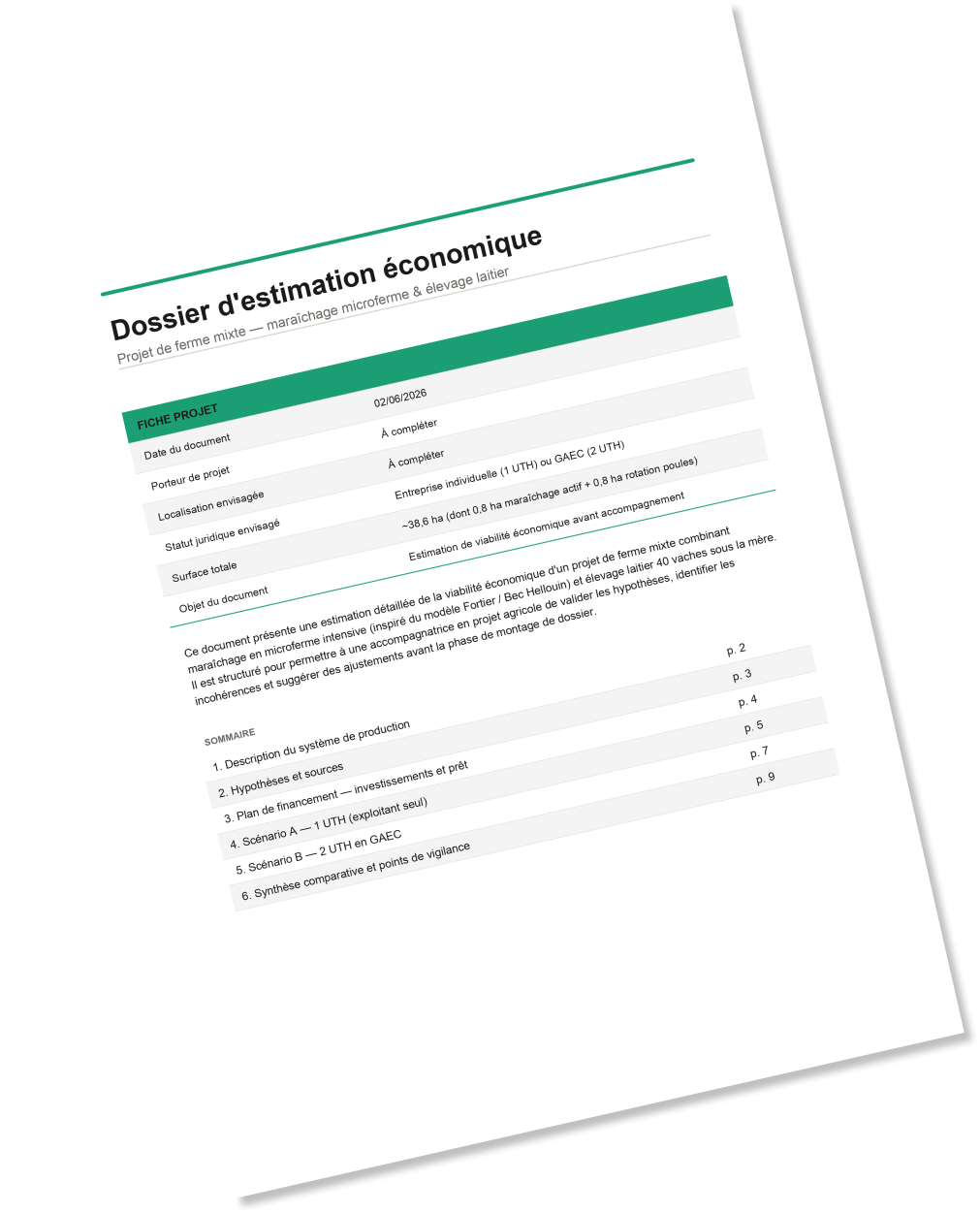
User Projection
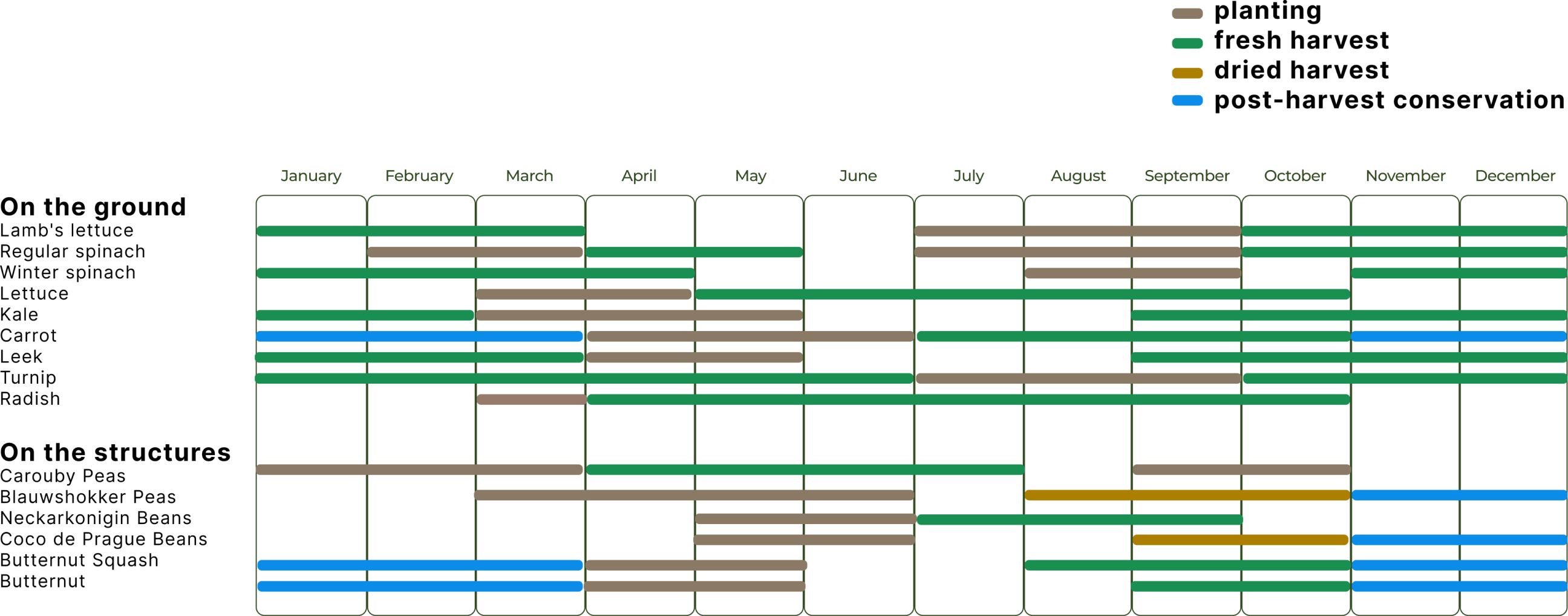
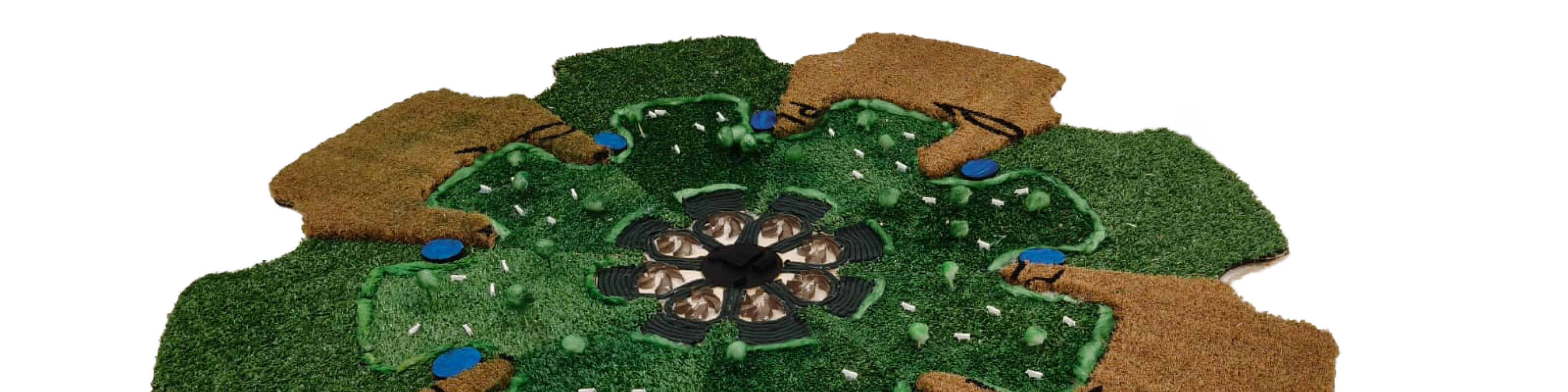
I modeled harvest calendar and farm layout
and then built a scale mock-up to help farmers physically visualize and project themselves in the system.
Value proposition
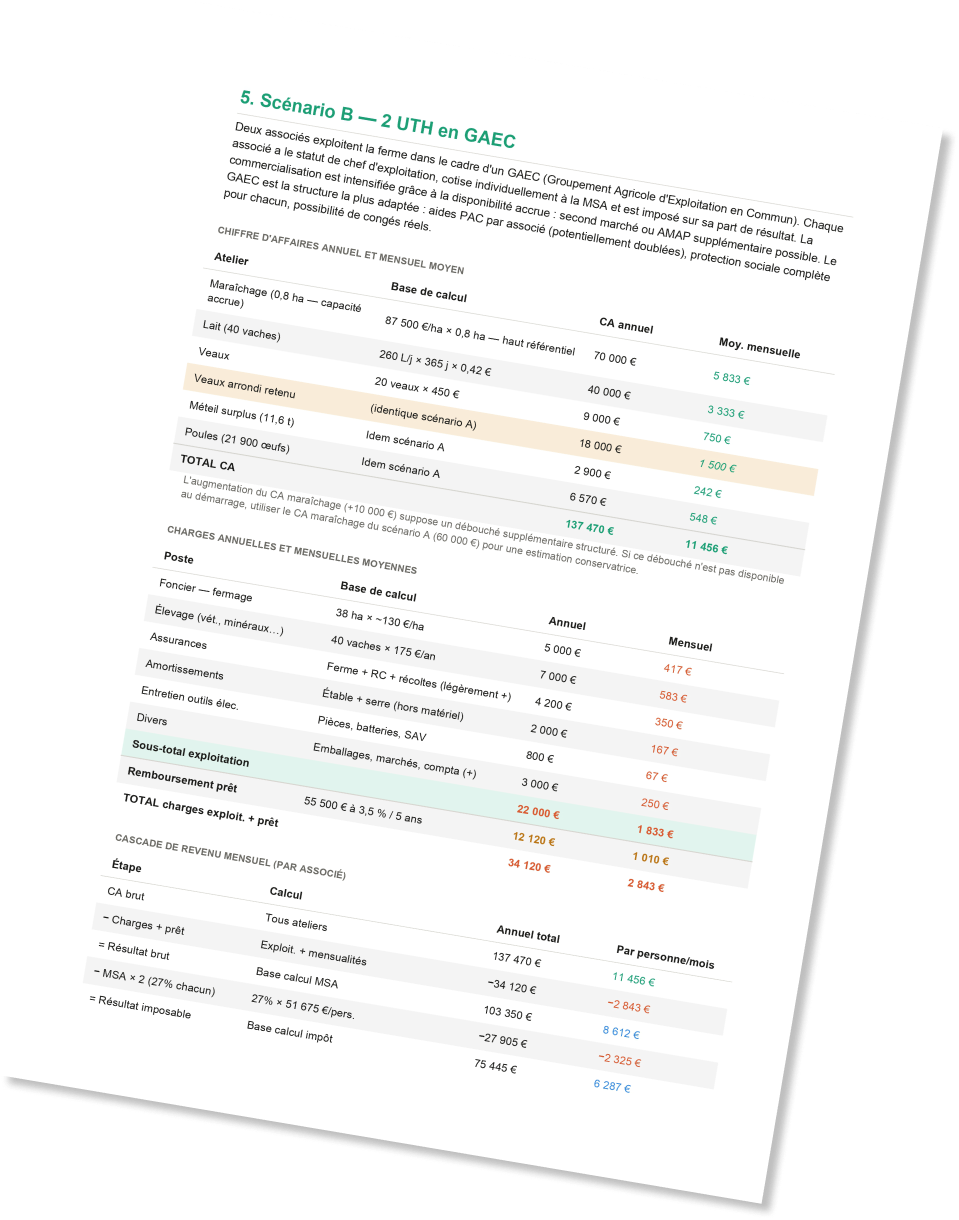
I modeled the direct benefits of adopting our solution
and validated them with an industry professional
to demonstrate the social gain.
Acceptability Testing
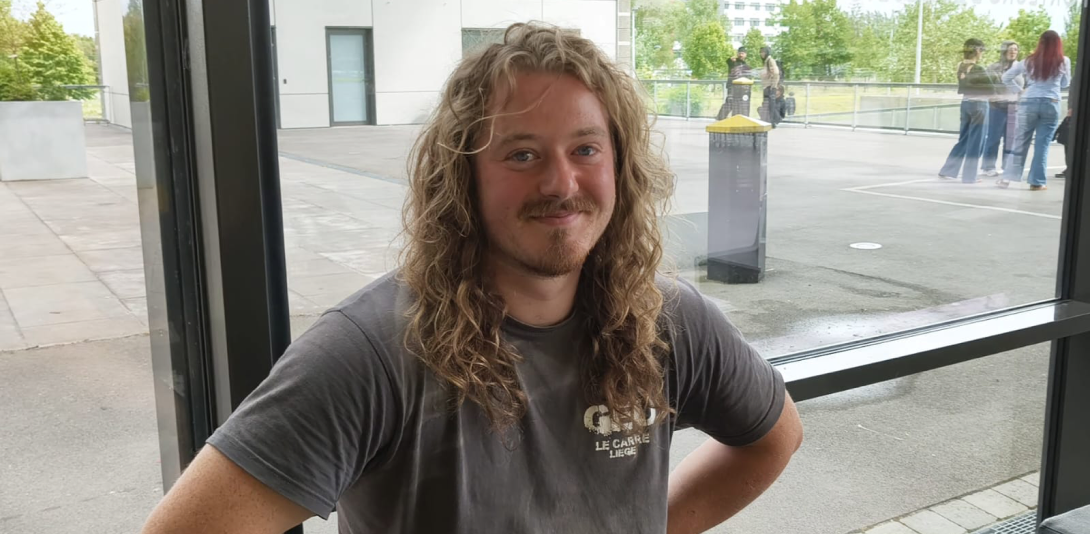
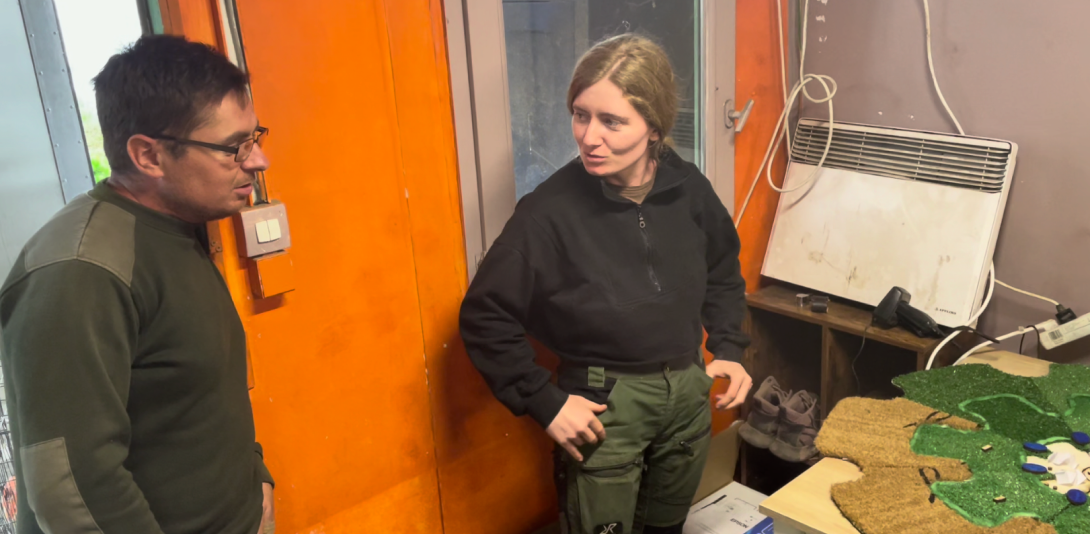
Farmers at Ferme Bonne Espérance (HVE): Diversified Vegetable Farming and Integrated Agriculture
Adeline & Jean-Henri
Yeah, you're setting up another farm
like this for me out back [...] Honestly, why not?
It's diverse, there are plenty of things to do.
All the things we love
Organic farmer just starting out vegetable farming on 1.3 ha
Grégoire
I wouldn't take this farm. Technology comes
at a financial cost, but it also has social, environmental, and human costs. And the raw materials are mined by children in the Congo.
Advisor to project leaders on agricultural installation
Julie
The assumptions you included in your cost estimate, its a steady rhythm. After 3 or 4 years of getting settled, or even five that might work. Scenario B, seems to me a little more consistent,
at least it term of workload. It’s just that the work is divided between 2 people and I think it will be more livable. And there is still a pretty significant net income.
From the ecosystem, I defined the specifications that I gave to the transportation and digital designer. Then I overview their work
to ensure coherency with the ecosystem
and in between every elements
Specification
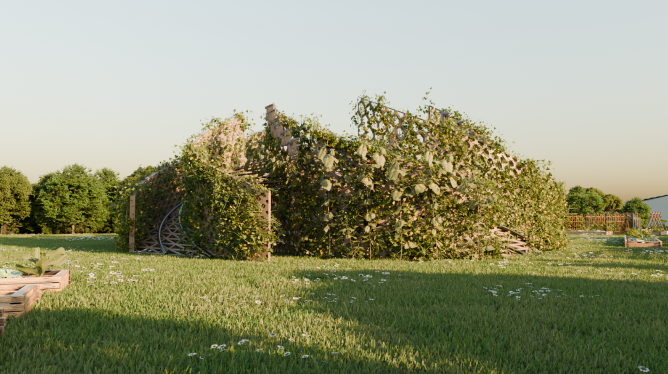
Living space: Our structure provides
a shaded shelter for local population
to come and enjoy a break in nature.
Biodiversity refuge: Our structure provides shelter to help restore this biodiversity
thanks to its many nooks and crannies.
Watering: In addition to providing support
for plants, we added an irrigation feature
to our structures by using Oyas' principles
for passive irrigation.
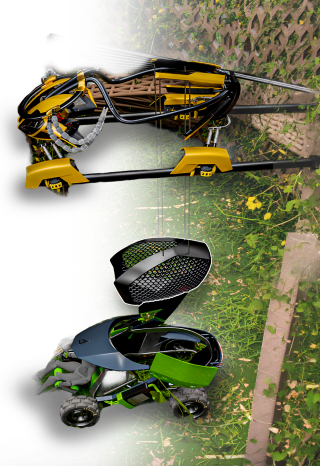
Climbing structures: Sliding on rails
to move around the structures
Harvesting arms: Soft robotic
Changing storage: Cables for lowering
full storage into the vehicle
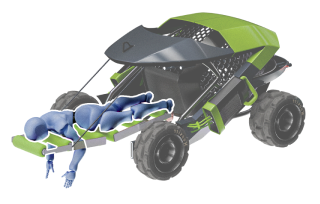
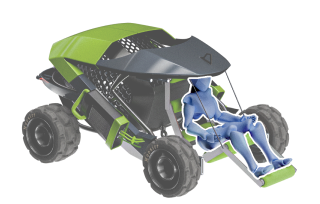
2 positions: Lying down mode
for harvesting / Sitting mode for mulching
and sowing
Vacuum arm: Push back mode for mulching
/ Suction mode to puy vegetables in tank
while harvesting
Changing storage: Opening to receive
robot’s storage
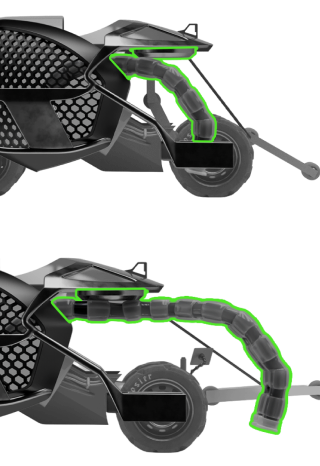
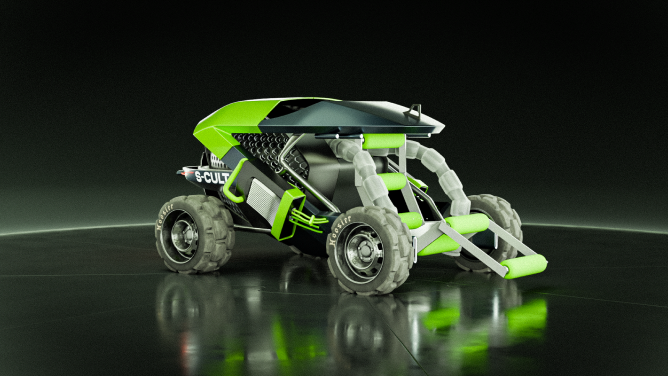
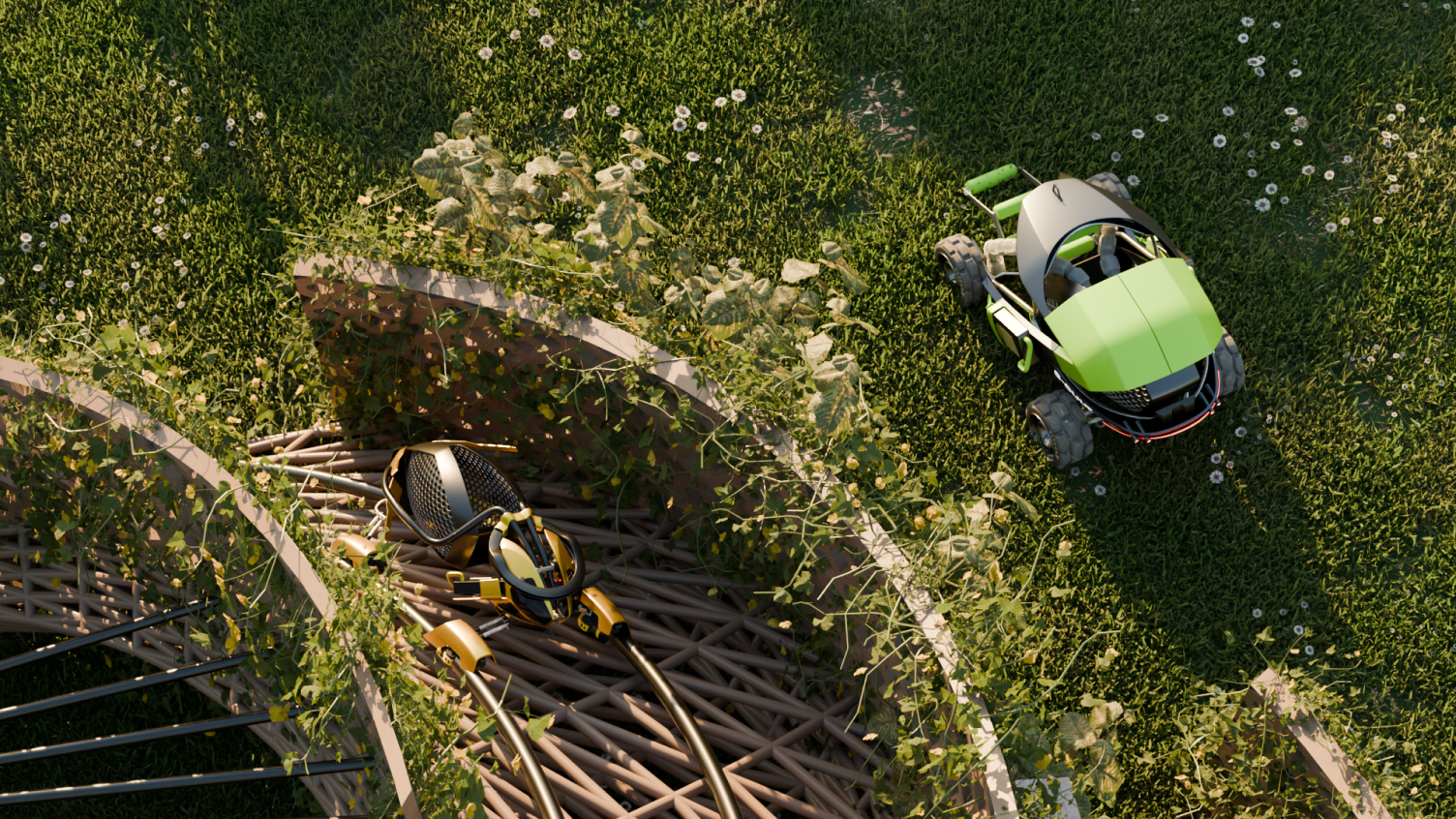
Design by Leo Deluy transportation designer
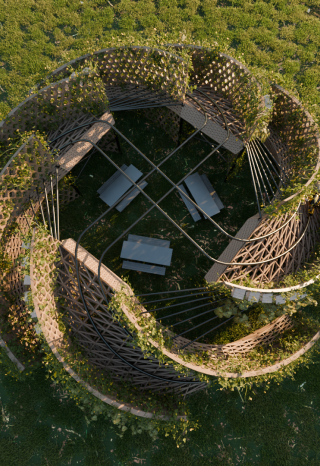
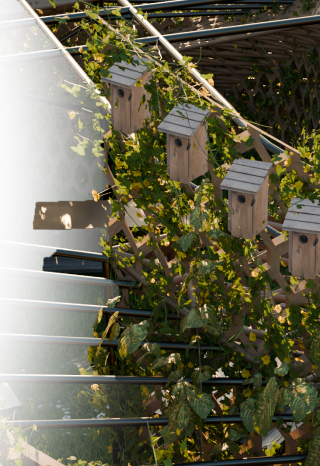
Design by Gaspard Deveugle digital designer
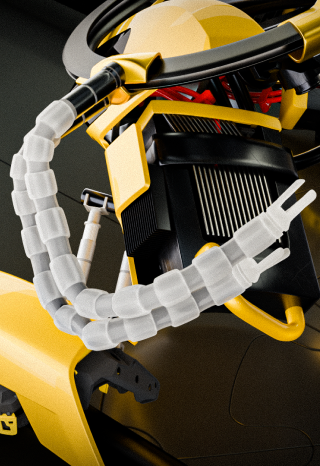
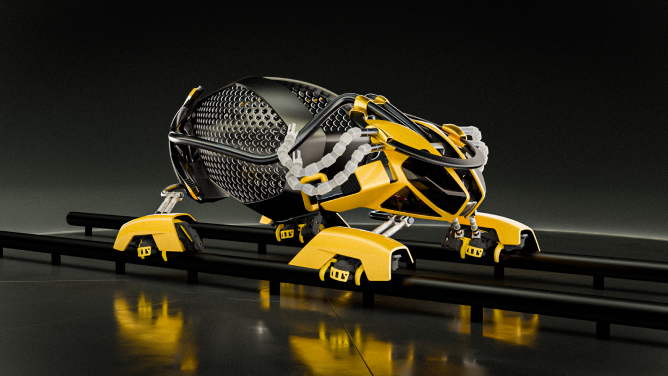
Design by Paul Farasse transportation designer
structures

Automated robot

Ground vehicule


ecosystem

Personal reflexion
While our immersion at the Salon de l’Agriculture was invaluable, it left us without a structured user panel. When agricultural school approvals for a co-design session stalled and peak season made farmers unreachable during concept generation, I felt completely stuck
on how to contribute. Learning new strategic frameworks right before the development phase allowed me to reset and step up to lead
my team through three key design objectives. My team really appreciated the strategy, and our natural complementarity let
each of us focus on what we enjoyed most. Mine was mapping
the ecosystem, building the physical mockup, and facilitating user tests. My core learning: a great design strategy isn't rigid; it must evolve with the realities of the field.
The vehicles' look, sleek, futuristic, a bit aggressive, was a choice made by our transportation and digital designers, and I'm not convinced
it's the right fit for farmers as a target audience. Given the time
we had, my exchanges with them stayed focused on function rather than aesthetics. If I were to continue this project, testing that visual language directly with farmers is where I'd start.
Nami